
Published on October 25, 2026
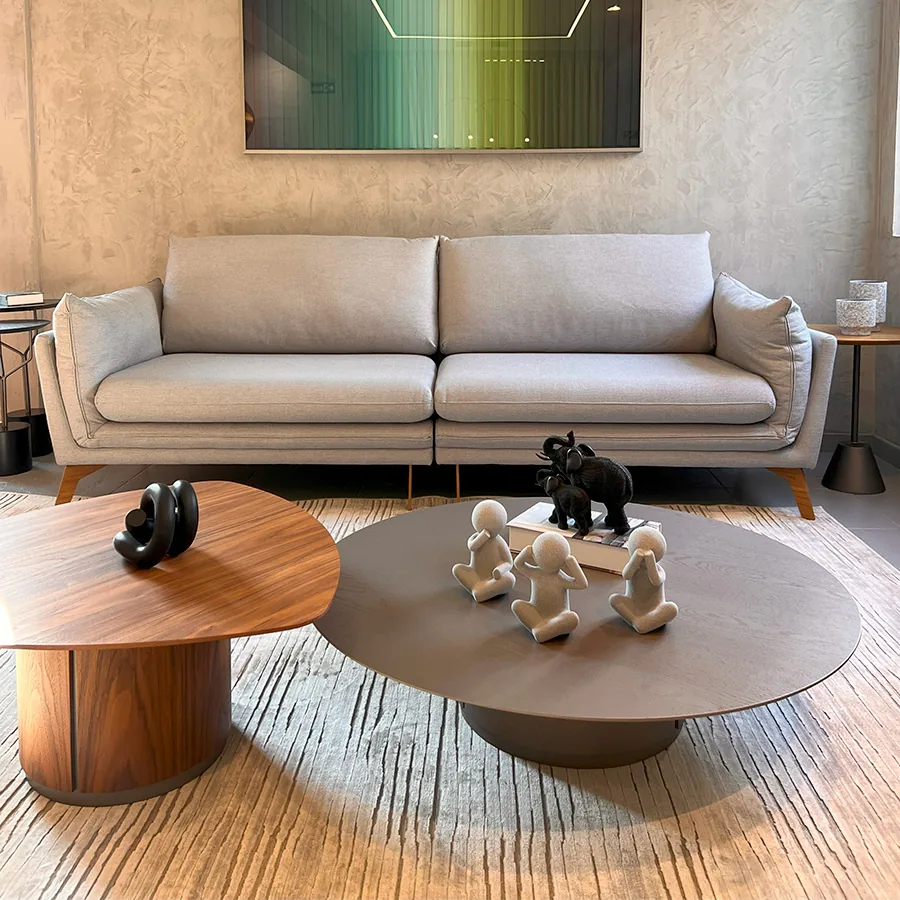
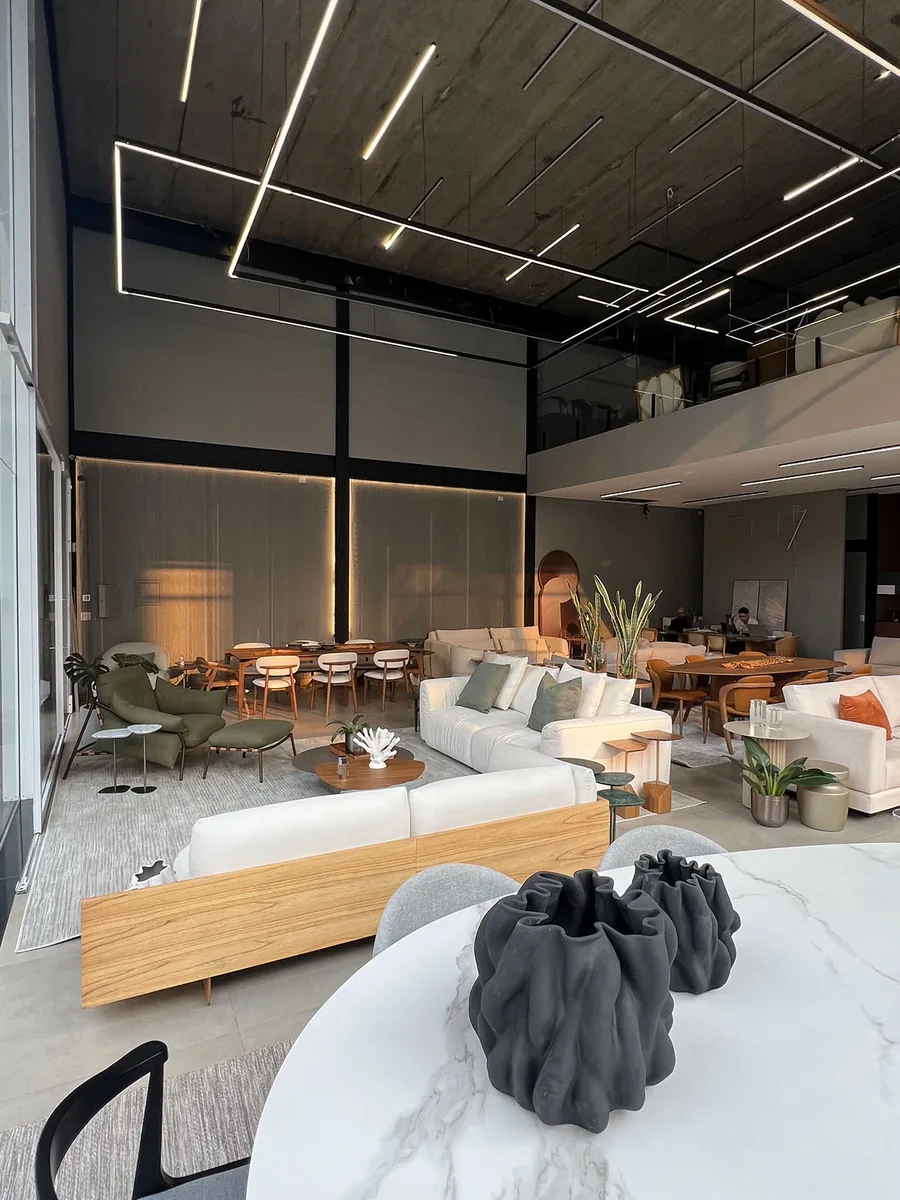
When people begin renovating a living room, the conversation usually starts with the sofa, the table or the rug. Light comes last, often reduced to a single fixture in the ceiling. That is a common mistake: lighting determines how each material appears, how people feel and even how long they want to stay in a room. In this article we share ideas for treating light as part of the project from day one, with the same care you give to an upholstery fabric or a wood finish.
Light changes how materials read
A mid-toned wood can look golden under warm light and turn grayish under cool light. Raw linen gains depth when lit from the side and loses its texture when lit head-on. Polished stone, leather, straw and loosely woven fabrics each respond differently, which is why it is worth testing samples in your own space at different times of day. Pay attention to the color temperature of bulbs too: warmer tones tend to suit resting areas, while neutral tones work well at work surfaces and reading corners. Avoid deciding from a catalog photo alone. Your home has its own natural light, and it should guide your choices.
Layers instead of a single point
A well-lit room rarely relies on one source. The idea is to combine layers: a soft general light that fills the space without harsh shadows; supporting lights for activities such as reading, cooking or working; and accent points that enhance a painting, a shelf or the texture of a wall. When these layers can be switched on separately, the room changes through the day. The same space serves a family lunch, a quiet evening conversation and a silent moment with a book. Dimmers are discreet allies, letting light follow the rhythm of the people who live there.
Lamps as furniture
Some lamps simply do a job, and others also fill the space with a presence of their own. A table lamp in glass, ceramic or worked metal can anchor a sideboard vignette with the same weight as a vase or a sculpture. In those cases, think about scale, proportion and silhouette, as you would when choosing an armchair. Handmade pieces carry small variations that reveal the maker's hand and give a room character. Fabric or paper shades, meanwhile, diffuse light gently and create a welcoming glow, ideal for bedrooms and reading nooks. Remember, too, that a lamp switched on and a lamp switched off are two different images: look at both.
Light and well-being through the day
Light also affects rest. In the evening, low, warm sources help the body slow down, while bright overhead light tends to keep a room in an alert state. In living areas, it is worth reserving a more intimate circuit for the end of the day, with table and floor lamps, leaving the central lighting for tasks and cleaning. In a home office, a supporting light placed to the side, rather than behind the screen, helps reduce eye strain. These are simple adjustments that make a home feel more welcoming without major changes.
Plan the light before you furnish
The best moment to think about lighting is before the furniture layout is final. Power points, outlets, tracks and wall lights depend on where the sofa, dining table and reading chair will go. A dining table, for example, calls for a source that lights the tabletop without dazzling those seated; a sofa calls for comfortable side light without glare on the television. In apartments, where ceiling height and windows limit the options, floor and table lamps offer flexibility without construction. Consider maintenance as well: delicate surfaces call for a soft, dry cloth, and good-quality bulbs avoid frequent replacement. Finally, talk with the professional guiding your project so light, color and materials are aligned from the start.
At Lyra Home, we believe every room is the sum of furniture, materials and light. If you would like to think about lighting together with the pieces for your home, visit our showroom in Moema, at Alameda dos Maracatins, 843, or message a Lyra consultant on WhatsApp. We would be glad to talk about your space.